[ . BACK to DARUMA MUSEUM TOP . ]
:::::::::::::::::::::::::::::::::::::::::::::::::::::::::::::::::::::::::::::::::::::::::::::::::::::::::::::::::::::::::::::::::::::::::::::::::::::::::::::::::::::::::::::::::::::::::::::::::::::::::
Articles about Enku 円空
..............................................................................................................................................
Daizan Roshi -
. Enku – A book of carvings and poems .
Dunn Michael Dunn - Enku: The Extraordinary Monk of 17th-Century Japan
. by Michael Dunn .
Gifu Hashima town 岐阜県羽島市
. continue carving - (Japanese) .
Mace François Macé
. And Mokujiki’s smile revealed true beauty to Yanagi Sōetsu .
Yanagi Sōetsu, Sooetsu 柳宗悦 Yanagi Soetsu Muneyoshi
Paget Rhiannon Paget
. Seeing the wood for Enku’s Buddhas .
Schumacher, Mark Schumacher
EDO SCULPTORS. Enku, Mokujiki, Others
source : www.onmarkproductions.com
:::::::::::::::::::::::::::::::::::::::::::::::::::::::::::::::::::::::::::::::::::::::::::::::::::::::::::::::::::::::::::::::::::::::::::::::::::::::::::::::::::::::::::::::::::::::::::::::::::::::::
. External LINKS about Enku 円空 .
. Statues carved by Enku - LIST .
. Enku - Exhibitions - INFO .
. Enku - Museums - INFO .
. Enku - Temples and Shrines - INFO .
. Enku and the Mountains of Japan - INFO .
. Buddha Statues and Japanese Deities .
[ . BACK to DARUMA MUSEUM TOP . ]
[ . BACK to WORLDKIGO . TOP . ]
- #articlesenku -
::::::::::::::::::::::::::::::::::::::::::::::::::::::::::::::::::::::::::::::::::::::::::::::::::::::::::::::::::::::::::::::::::::::::::::::::::::::::::::::::::::::::::::::::::::::::::::::::::::::::::
2013-01-31
Books
[ . BACK to DARUMA MUSEUM TOP . ]
:::::::::::::::::::::::::::::::::::::::::::::::::::::::::::::::::::::::::::::::::::::::::::::::::::::::::::::::::::::::::::::::::::::::::::::::::::::::::::::::::::::::::::::::::::::::::::::::::::::::::
Books about Enku 円空
:::::::::::::::::::::::::::::::::::::::::::::::::::::::::::::::::::::::::::::::::::::::::::::::::::::::::::::::::::::::::::::::::::::::::::::::::::::::::::::::::::::::::::::::::::::::::::::::::::::::::
芭蕉の旅、円空の旅
Travelling with Basho, Travelling with Enku
立松和平 Tatematsu Wahei (1947 - 2010)

. Matsuo Basho 松尾芭蕉 - Archives of the WKD .
winter sunshine -
my friends together
in one book
Gabi Greve, January 31, 2013
:::::::::::::::::::::::::::::::::::::::::::::::::::::::::::::::::::::::::::::::::::::::::::::::::::::::::::::::::::::::::::::::::::::::::::::::::::::::::::::::::::::::::::::::::::::::::::::::::::::::::

Aichi-ken no Enku-butsu - 愛知県の円空仏
ISBN-13: 978-4876700165
:::::::::::::::::::::::::::::::::::::::::::::::::::::::::::::::::::::::::::::::::::::::::::::::::::::::::::::::::::::::::::::::::::::::::::::::::::::::::::::::::::::::::::::::::::::::::::::::::::::::::
長谷川公茂 Hasegawa Kimishige
東海の円空を歩く

円空仏に関する本は、古書だったり、高価だったりと、最近では手に入りにくいので、円空仏ファンのひとりとして、こうした本が上梓されるのを心待ちにしていた。
一読して、素晴らしい本であることは、改めて言うまでもないが、本書を読み終えて、以下に気になった点をいくつか挙げておきたい。
source : tabinoashiato.blogspot.jp
円空 微笑みの謎


:::::::::::::::::::::::::::::::::::::::::::::::::::::::::::::::::::::::::::::::::::::::::::::::::::::::::::::::::::::::::::::::::::::::::::::::::::::::::::::::::::::::::::::::::::::::::::::::::::::::::
円空の旅
早坂 暁 Hayasaka

MORE - books about Enku at
source : www.amazon.co.jp
:::::::::::::::::::::::::::::::::::::::::::::::::::::::::::::::::::::::::::::::::::::::::::::::::::::::::::::::::::::::::::::::::::::::::::::::::::::::::::::::::::::::::::::::::::::::::::::::::::::::::
円空と瀬織津姫 Enku and Princess Seoritsu Hime
菊池展明 Kikuchi

その円空が、荒廃にまかせてあった池尻の白鳳時代の寺院跡である弥勒寺を訪れ、元禄二年(一六八九)にこの寺を再興し、同八年七月に死期を悟って自ら入定したと伝えられるのが、この入定塚である。
当該地一四一・八㎡の地目山林の地の中央に、藤[ふじ]・樫[かし]・桜が繁茂し、円空は、里人に入定するに因[ちな]んで「この藤の花が咲く間は、この土中に生きていると思ってほしい」と言い残して世を去ったという。とき、七月一五日であった。
このような強烈な精神力と、おそるべき情熱をもって生涯を閉じた円空は、いまも多くの余韻をここに残している。 関市教育委員会
source : teamtamayura.blo
Deity Seoritsu hime enshrined as Haraedo no Ookami 祓戸大神.
Seoritsu-hime being worshiped together in shrines with Amaterasu Omikami.
. Haraedo 祓戸 .
早池峯神社 - - 瀬織津姫命 - Hayachine Jinja - Seoritsu Hime (Seori-Tsu Hime) - Iwate, Tono
:::::::::::::::::::::::::::::::::::::::::::::::::::::::::::::::::::::::::::::::::::::::::::::::::::::::::::::::::::::::::::::::::::::::::::::::::::::::::::::::::::::::::::::::::::::::::::::::::::::::::
Enku: Sculptor of a Hundred Thousand Buddhas
Takahashi, Kazuaki Tanahashi
:::::::::::::::::::::::::::::::::::::::::::::::::::::::::::::::::::::::::::::::::::::::::::::::::::::::::::::::::::::::::::::::::::::::::::::::::::::::::::::::::::::::::::::::::::::::::::::::::::::::::
異形の円空仏誕生の謎に迫る!
梅原猛 Umehara Takeshi

十二万体もの異形の神仏像を彫ったという江戸の仏師・円空。三年にわたって全国の円空仏を訪ね歩いた著者が、残された絵画、和歌などからその謎多き生涯を読み解き、神仏習合の先駆けをなす白山信仰の修験者で、日本人の宗教思想を芸術表現にまで高めた文化史上の重要人物として再評価。
早くに母を亡くした自らの人生を円空の生涯に重ね合わせつつ、新しい円空像を描き出す渾身の力作。
source : www.shinchosha.co.jp
:::::::::::::::::::::::::::::::::::::::::::::::::::::::::::::::::::::::::::::::::::::::::::::::::::::::::::::::::::::::::::::::::::::::::::::::::::::::::::::::::::::::::::::::::::::::::::::::::::::::::
. Buddha Statues and Japanese Deities .
[ . BACK to DARUMA MUSEUM TOP . ]
[ . BACK to WORLDKIGO . TOP . ]
::::::::::::::::::::::::::::::::::::::::::::::::::::::::::::::::::::::::::::::::::::::::::::::::::::::::::::::::::::::::::::::::::::::::::::::::::::::::::::::::::::::::::::::::::::::::::::::::::::::::::
:::::::::::::::::::::::::::::::::::::::::::::::::::::::::::::::::::::::::::::::::::::::::::::::::::::::::::::::::::::::::::::::::::::::::::::::::::::::::::::::::::::::::::::::::::::::::::::::::::::::::
Books about Enku 円空
:::::::::::::::::::::::::::::::::::::::::::::::::::::::::::::::::::::::::::::::::::::::::::::::::::::::::::::::::::::::::::::::::::::::::::::::::::::::::::::::::::::::::::::::::::::::::::::::::::::::::
芭蕉の旅、円空の旅
Travelling with Basho, Travelling with Enku
立松和平 Tatematsu Wahei (1947 - 2010)
. Matsuo Basho 松尾芭蕉 - Archives of the WKD .
winter sunshine -
my friends together
in one book
Gabi Greve, January 31, 2013
:::::::::::::::::::::::::::::::::::::::::::::::::::::::::::::::::::::::::::::::::::::::::::::::::::::::::::::::::::::::::::::::::::::::::::::::::::::::::::::::::::::::::::::::::::::::::::::::::::::::::
Aichi-ken no Enku-butsu - 愛知県の円空仏
ISBN-13: 978-4876700165
:::::::::::::::::::::::::::::::::::::::::::::::::::::::::::::::::::::::::::::::::::::::::::::::::::::::::::::::::::::::::::::::::::::::::::::::::::::::::::::::::::::::::::::::::::::::::::::::::::::::::
長谷川公茂 Hasegawa Kimishige
東海の円空を歩く
円空仏に関する本は、古書だったり、高価だったりと、最近では手に入りにくいので、円空仏ファンのひとりとして、こうした本が上梓されるのを心待ちにしていた。
一読して、素晴らしい本であることは、改めて言うまでもないが、本書を読み終えて、以下に気になった点をいくつか挙げておきたい。
source : tabinoashiato.blogspot.jp
円空 微笑みの謎


:::::::::::::::::::::::::::::::::::::::::::::::::::::::::::::::::::::::::::::::::::::::::::::::::::::::::::::::::::::::::::::::::::::::::::::::::::::::::::::::::::::::::::::::::::::::::::::::::::::::::
円空の旅
早坂 暁 Hayasaka
MORE - books about Enku at
source : www.amazon.co.jp
:::::::::::::::::::::::::::::::::::::::::::::::::::::::::::::::::::::::::::::::::::::::::::::::::::::::::::::::::::::::::::::::::::::::::::::::::::::::::::::::::::::::::::::::::::::::::::::::::::::::::
円空と瀬織津姫 Enku and Princess Seoritsu Hime
菊池展明 Kikuchi

その円空が、荒廃にまかせてあった池尻の白鳳時代の寺院跡である弥勒寺を訪れ、元禄二年(一六八九)にこの寺を再興し、同八年七月に死期を悟って自ら入定したと伝えられるのが、この入定塚である。
当該地一四一・八㎡の地目山林の地の中央に、藤[ふじ]・樫[かし]・桜が繁茂し、円空は、里人に入定するに因[ちな]んで「この藤の花が咲く間は、この土中に生きていると思ってほしい」と言い残して世を去ったという。とき、七月一五日であった。
このような強烈な精神力と、おそるべき情熱をもって生涯を閉じた円空は、いまも多くの余韻をここに残している。 関市教育委員会
source : teamtamayura.blo
Deity Seoritsu hime enshrined as Haraedo no Ookami 祓戸大神.
Seoritsu-hime being worshiped together in shrines with Amaterasu Omikami.
. Haraedo 祓戸 .
早池峯神社 - - 瀬織津姫命 - Hayachine Jinja - Seoritsu Hime (Seori-Tsu Hime) - Iwate, Tono
:::::::::::::::::::::::::::::::::::::::::::::::::::::::::::::::::::::::::::::::::::::::::::::::::::::::::::::::::::::::::::::::::::::::::::::::::::::::::::::::::::::::::::::::::::::::::::::::::::::::::
Enku: Sculptor of a Hundred Thousand Buddhas
Takahashi, Kazuaki Tanahashi
:::::::::::::::::::::::::::::::::::::::::::::::::::::::::::::::::::::::::::::::::::::::::::::::::::::::::::::::::::::::::::::::::::::::::::::::::::::::::::::::::::::::::::::::::::::::::::::::::::::::::
異形の円空仏誕生の謎に迫る!
梅原猛 Umehara Takeshi
十二万体もの異形の神仏像を彫ったという江戸の仏師・円空。三年にわたって全国の円空仏を訪ね歩いた著者が、残された絵画、和歌などからその謎多き生涯を読み解き、神仏習合の先駆けをなす白山信仰の修験者で、日本人の宗教思想を芸術表現にまで高めた文化史上の重要人物として再評価。
早くに母を亡くした自らの人生を円空の生涯に重ね合わせつつ、新しい円空像を描き出す渾身の力作。
source : www.shinchosha.co.jp
:::::::::::::::::::::::::::::::::::::::::::::::::::::::::::::::::::::::::::::::::::::::::::::::::::::::::::::::::::::::::::::::::::::::::::::::::::::::::::::::::::::::::::::::::::::::::::::::::::::::::
. Buddha Statues and Japanese Deities .
[ . BACK to DARUMA MUSEUM TOP . ]
[ . BACK to WORLDKIGO . TOP . ]
::::::::::::::::::::::::::::::::::::::::::::::::::::::::::::::::::::::::::::::::::::::::::::::::::::::::::::::::::::::::::::::::::::::::::::::::::::::::::::::::::::::::::::::::::::::::::::::::::::::::::

2013-01-26
External Links - INFO
[ . BACK to DARUMA MUSEUM TOP . ]
:::::::::::::::::::::::::::::::::::::::::::::::::::::::::::::::::::::::::::::::::::::::::::::::::::::::::::::::::::::::::::::::::::::::::::::::::::::::::::::::::::::::::::::::::::::::::::::::::::::::::
External LINKS about Enku 円空
円空 微笑み物語
(very detailed)
Timeline
http://www.enku.jp/history/index.html
Index of places
http://www.enku.jp/search/index.html
waka, paintings and calligraphy of Enku
http://www.enku.jp/artist/index.html
and MORE
source : www.enku.jp/charm
.............................................................................
立ち木彫り」仁王像(千光寺・高山市)
http://plaza.rakuten.co.jp/jiroh26/diary/201005210003/
埼玉県内の円空仏 Saitama, Yajima family treasures
大黒天立像(矢島家)
観音菩薩立像(矢島家)
護法神立像(矢島家)
http://www.city.hasuda.saitama.jp/city/outline/history/enku.html
.......................................................................
円空さんを訪ねる旅 - very extensive
http://shigeru.kommy.com/enkuu.htm
円空さんを訪ねる旅 円空さんを訪ねる旅(1)
岐阜県奥飛騨禅通寺 円空さんを訪ねる旅(2)
大津市三井寺 円空さんを訪ねる旅(3)
飛騨丹生川千光寺 円空さんを訪ねる旅(4)
高山市郷土資料館
HPへ戻る 円空さんを訪ねる旅(5)
下呂市飛騨合掌村 円空さんを訪ねる旅(6)
金山町祖師野薬師堂 円空さんを訪ねる旅(7)
美並ふるさと館 円空さんを訪ねる旅(8)
美並平成の円空彫
円空さんを訪ねる旅(9)
岐阜羽島長間薬師寺 円空さんを訪ねる旅(10)
岐阜羽島中観音堂 円空さんを訪ねる旅(11)
岐阜市円空美術館 円空さんを訪ねる旅(12)
洞戸高賀神社円空記念館 円空さんを訪ねる旅(13)
河井寛次郎記念館
円空さんを訪ねる旅(14)
関市弥勒寺・円空館 円空さんを訪ねる旅(15)
天川村栃尾観音堂 円空さんを訪ねる旅(16)
飛騨国府清峯寺 円空さんを訪ねる旅(17)
高山市飛騨国分寺 円空さんを訪ねる旅(18)
下呂市小坂郷土館
円空さんを訪ねる旅(19)
大垣報恩寺 円空さんを訪ねる旅(20)
伊吹山太平観音堂 円空さんを訪ねる旅(21)
大和郡山松尾寺 円空さんを訪ねる旅(22)
磯部町上五知薬師堂 円空さんを訪ねる旅(23)
志摩市立神少林寺・薬師堂
円空さんを訪ねる旅(24)
志摩市片田三蔵寺・漁協 円空さんを訪ねる旅(25)
伊勢市中山寺 円空さんを訪ねる旅(26)
尾張荒子観音寺 円空さんを訪ねる旅(27)
尾張龍泉寺 円空さんを訪ねる旅(28)
豊田市民芸館
円空・木喰展(29)
美術館「えき」KYOTO 円空展(30)
一宮市博物館 円空さんを訪ねる旅(31)
江南市音楽寺 円空さんを訪ねる旅(32)
津島市千体地蔵堂 円空さんを訪ねる旅(33)
津市白山町浜城観音堂
円空さんを訪ねる旅(34)
津市真教寺閻魔堂 円空さんを訪ねる旅(35)
三重郡菰野町明福寺 円空さんを訪ねる旅(36)
奈良県天川村 円空さんを訪ねる旅(37)
飛騨上宝町本覚寺 円空さんを訪ねる旅(38)
上宝ふるさと歴史館
円空さんを訪ねる旅(39)
上宝町桂峯寺 円空さんを訪ねる旅(40)
美濃市の円空仏 円空さんを訪ねる旅(41)
奈良斑鳩法隆寺 円空さんを訪ねる旅〈42〉
長間薬師寺から竹鼻へ 円空さんを訪ねる旅(43)
白川町和泉薬師堂
円空さんを訪ねる旅(44)
金山町祖師野八幡宮 円空さんを訪ねる旅(45)
金山町祖師野薬師堂 円空さんを訪ねる旅〈46〉
白山町佐見庚申堂他 円空さんを訪ねる旅〈47〉
中津市加子母大杉地蔵尊
:::::::::::::::::::::::::::::::::::::::::::::::::::::::::::::::::::::::::::::::::::::::::::::::::::::::::::::::::::::::::::::::::::::::::::::::::::::::::::::::::::::::::::::::::::::::::::::::::::::::::
check
Another link with Enku Material, in Japanese.
Small Kannon Statues 観音群像
. . . CLICK here for Photos !
Yakushi Nyorai 薬師如来
. . . CLICK here for Photos !
Owarino Enku Butsu 尾張野の円空仏
. . . CLICK here for Photos !
円空は、江戸時代前期に北海道から近畿に至る各地を旅したお坊さんです。各地に多数の「円空仏」と呼ばれる粗削りの木彫仏像を刻み、残していきました。飛騨地方でも各地の寺社や旧家に多くの円空仏が見られます。

「ナタバツリ」と呼ばれる鉈で粗く削った独特の製作スタイルや、粗削りながらもどことなく柔和で温かみがある表情は多くの人を魅了しつづけています。飛騨の里にあるものは、円空の作風に魅せられた近年の職人たちによる作品です。
http://www.hidanosato.org/shinko/rbsb_main.html
:::::::::::::::::::::::::::::::::::::::::::::::::::::::::::::::::::::::::::::::::::::::::::::::::::::::::::::::::::::::::::::::::::::::::::::::::::::::::::::::::::::::::::::::::::::::::::::::::::::::::
[ . BACK to DARUMA MUSEUM TOP . ]
[ . BACK to WORLDKIGO . TOP . ]
::::::::::::::::::::::::::::::::::::::::::::::::::::::::::::::::::::::::::::::::::::::::::::::::::::::::::::::::::::::::::::::::::::::::::::::::::::::::::::::::::::::::::::::::::::::::::::::::::::::::::
:::::::::::::::::::::::::::::::::::::::::::::::::::::::::::::::::::::::::::::::::::::::::::::::::::::::::::::::::::::::::::::::::::::::::::::::::::::::::::::::::::::::::::::::::::::::::::::::::::::::::
External LINKS about Enku 円空
円空 微笑み物語
(very detailed)
Timeline
http://www.enku.jp/history/index.html
Index of places
http://www.enku.jp/search/index.html
waka, paintings and calligraphy of Enku
http://www.enku.jp/artist/index.html
and MORE
source : www.enku.jp/charm
.............................................................................
立ち木彫り」仁王像(千光寺・高山市)
http://plaza.rakuten.co.jp/jiroh26/diary/201005210003/
埼玉県内の円空仏 Saitama, Yajima family treasures
大黒天立像(矢島家)
観音菩薩立像(矢島家)
護法神立像(矢島家)
http://www.city.hasuda.saitama.jp/city/outline/history/enku.html
.......................................................................
円空さんを訪ねる旅 - very extensive
http://shigeru.kommy.com/enkuu.htm
円空さんを訪ねる旅 円空さんを訪ねる旅(1)
岐阜県奥飛騨禅通寺 円空さんを訪ねる旅(2)
大津市三井寺 円空さんを訪ねる旅(3)
飛騨丹生川千光寺 円空さんを訪ねる旅(4)
高山市郷土資料館
HPへ戻る 円空さんを訪ねる旅(5)
下呂市飛騨合掌村 円空さんを訪ねる旅(6)
金山町祖師野薬師堂 円空さんを訪ねる旅(7)
美並ふるさと館 円空さんを訪ねる旅(8)
美並平成の円空彫
円空さんを訪ねる旅(9)
岐阜羽島長間薬師寺 円空さんを訪ねる旅(10)
岐阜羽島中観音堂 円空さんを訪ねる旅(11)
岐阜市円空美術館 円空さんを訪ねる旅(12)
洞戸高賀神社円空記念館 円空さんを訪ねる旅(13)
河井寛次郎記念館
円空さんを訪ねる旅(14)
関市弥勒寺・円空館 円空さんを訪ねる旅(15)
天川村栃尾観音堂 円空さんを訪ねる旅(16)
飛騨国府清峯寺 円空さんを訪ねる旅(17)
高山市飛騨国分寺 円空さんを訪ねる旅(18)
下呂市小坂郷土館
円空さんを訪ねる旅(19)
大垣報恩寺 円空さんを訪ねる旅(20)
伊吹山太平観音堂 円空さんを訪ねる旅(21)
大和郡山松尾寺 円空さんを訪ねる旅(22)
磯部町上五知薬師堂 円空さんを訪ねる旅(23)
志摩市立神少林寺・薬師堂
円空さんを訪ねる旅(24)
志摩市片田三蔵寺・漁協 円空さんを訪ねる旅(25)
伊勢市中山寺 円空さんを訪ねる旅(26)
尾張荒子観音寺 円空さんを訪ねる旅(27)
尾張龍泉寺 円空さんを訪ねる旅(28)
豊田市民芸館
円空・木喰展(29)
美術館「えき」KYOTO 円空展(30)
一宮市博物館 円空さんを訪ねる旅(31)
江南市音楽寺 円空さんを訪ねる旅(32)
津島市千体地蔵堂 円空さんを訪ねる旅(33)
津市白山町浜城観音堂
円空さんを訪ねる旅(34)
津市真教寺閻魔堂 円空さんを訪ねる旅(35)
三重郡菰野町明福寺 円空さんを訪ねる旅(36)
奈良県天川村 円空さんを訪ねる旅(37)
飛騨上宝町本覚寺 円空さんを訪ねる旅(38)
上宝ふるさと歴史館
円空さんを訪ねる旅(39)
上宝町桂峯寺 円空さんを訪ねる旅(40)
美濃市の円空仏 円空さんを訪ねる旅(41)
奈良斑鳩法隆寺 円空さんを訪ねる旅〈42〉
長間薬師寺から竹鼻へ 円空さんを訪ねる旅(43)
白川町和泉薬師堂
円空さんを訪ねる旅(44)
金山町祖師野八幡宮 円空さんを訪ねる旅(45)
金山町祖師野薬師堂 円空さんを訪ねる旅〈46〉
白山町佐見庚申堂他 円空さんを訪ねる旅〈47〉
中津市加子母大杉地蔵尊
:::::::::::::::::::::::::::::::::::::::::::::::::::::::::::::::::::::::::::::::::::::::::::::::::::::::::::::::::::::::::::::::::::::::::::::::::::::::::::::::::::::::::::::::::::::::::::::::::::::::::
check
Another link with Enku Material, in Japanese.
Small Kannon Statues 観音群像
. . . CLICK here for Photos !
Yakushi Nyorai 薬師如来
. . . CLICK here for Photos !
Owarino Enku Butsu 尾張野の円空仏
. . . CLICK here for Photos !
円空は、江戸時代前期に北海道から近畿に至る各地を旅したお坊さんです。各地に多数の「円空仏」と呼ばれる粗削りの木彫仏像を刻み、残していきました。飛騨地方でも各地の寺社や旧家に多くの円空仏が見られます。

「ナタバツリ」と呼ばれる鉈で粗く削った独特の製作スタイルや、粗削りながらもどことなく柔和で温かみがある表情は多くの人を魅了しつづけています。飛騨の里にあるものは、円空の作風に魅せられた近年の職人たちによる作品です。
http://www.hidanosato.org/shinko/rbsb_main.html
:::::::::::::::::::::::::::::::::::::::::::::::::::::::::::::::::::::::::::::::::::::::::::::::::::::::::::::::::::::::::::::::::::::::::::::::::::::::::::::::::::::::::::::::::::::::::::::::::::::::::
[ . BACK to DARUMA MUSEUM TOP . ]
[ . BACK to WORLDKIGO . TOP . ]
::::::::::::::::::::::::::::::::::::::::::::::::::::::::::::::::::::::::::::::::::::::::::::::::::::::::::::::::::::::::::::::::::::::::::::::::::::::::::::::::::::::::::::::::::::::::::::::::::::::::::
2013-01-22
continue carving
[ . BACK to DARUMA MUSEUM TOP . ]
:::::::::::::::::::::::::::::::::::::::::::::::::::::::::::::::::::::::::::::::::::::::::::::::::::::::::::::::::::::::::::::::::::::::::::::::::::::::::::::::::::::::::::::::::::::::::::::::::::::::::

羽島市民が親しみを込めて「円空さん」、と呼ぶ人物がいます。皆さんご存知の、円空上人です。
円空は江戸時代初期(1632年)に美濃国(現:岐阜県)に生まれ、日本全国を遊行しながら様々な木彫りの仏像をノミで彫り上げ、64年の生涯に約12万体の仏像を作った、と言い伝えられている僧侶です。
source : www.windsnet.ne.jp/inaka
:::::::::::::::::::::::::::::::::::::::::::::::::::::::::::::::::::::::::::::::::::::::::::::::::::::::::::::::::::::::::::::::::::::::::::::::::::::::::::::::::::::::::::::::::::::::::::::::::::::::::
[ . BACK to DARUMA MUSEUM TOP . ]
[ . BACK to WORLDKIGO . TOP . ]
::::::::::::::::::::::::::::::::::::::::::::::::::::::::::::::::::::::::::::::::::::::::::::::::::::::::::::::::::::::::::::::::::::::::::::::::::::::::::::::::::::::::::::::::::::::::::::::::::::::::::
:::::::::::::::::::::::::::::::::::::::::::::::::::::::::::::::::::::::::::::::::::::::::::::::::::::::::::::::::::::::::::::::::::::::::::::::::::::::::::::::::::::::::::::::::::::::::::::::::::::::::

羽島市民が親しみを込めて「円空さん」、と呼ぶ人物がいます。皆さんご存知の、円空上人です。
円空は江戸時代初期(1632年)に美濃国(現:岐阜県)に生まれ、日本全国を遊行しながら様々な木彫りの仏像をノミで彫り上げ、64年の生涯に約12万体の仏像を作った、と言い伝えられている僧侶です。
source : www.windsnet.ne.jp/inaka
:::::::::::::::::::::::::::::::::::::::::::::::::::::::::::::::::::::::::::::::::::::::::::::::::::::::::::::::::::::::::::::::::::::::::::::::::::::::::::::::::::::::::::::::::::::::::::::::::::::::::
[ . BACK to DARUMA MUSEUM TOP . ]
[ . BACK to WORLDKIGO . TOP . ]
::::::::::::::::::::::::::::::::::::::::::::::::::::::::::::::::::::::::::::::::::::::::::::::::::::::::::::::::::::::::::::::::::::::::::::::::::::::::::::::::::::::::::::::::::::::::::::::::::::::::::
2013-01-21
Daizan Roshi
[ . BACK to DARUMA MUSEUM TOP . ]
:::::::::::::::::::::::::::::::::::::::::::::::::::::::::::::::::::::::::::::::::::::::::::::::::::::::::::::::::::::::::::::::::::::::::::::::::::::::::::::::::::::::::::::::::::::::::::::::::::::::::
"Enku" poems of a master carver monk
Enku – A book of carvings and poems.
Kofuu-Senju Publications are currently working on a few projects at the same time. One of them is the Enku book. Enku was a travelling monk in 16th century Japan. He is mostly known for his incredible wood carvings of Buddhas, Deities and Japanese folk tale figures. He had vowed to carve 100000 statues in his lifetime. However it is not known how many he has produced in the end. But fact is that there are only a few thousand left today. These are closely guarded in several Japanese museums.

What many do not know is that he also wrote poetry.
200 of these poems, which have never been translated into English before are going to be presented in this book alongside photography of his carvings taken by Alex Kofuu Reinke in selected Museums in Japan in 2010.
Rinzai-Zen master and teacher Daizan Skinner Roshi and Mrs. have translated these poems in Japan several years ago. Daizan Roshi’s master is Shinzan Miyamae Roshi of Gyokuryuji Temple, which is located in Gifu –ken.
This is the very same area where Enku was born, raised and where he has reached enlightenment. Having close ties to this character monk from the 16th century, Daizan Roshi decided to walk in his footsteps by travelling Japan as a wandering monk for several years.
It was agreed that a large percentage of the profit of this book will be donated to a children’s fund for the disaster struck area of Tohoku in Japan.
Having produced 7 children between the two, Kofuu and Senju are very concerned about the health, wellbeing and happiness of children and immediately jumped on the realization of this project, which is also under chairmanship of master Horiyoshi III from Yokohama, Japan.
Look at the photos here
source : www.kspublishers.com
:::::::::::::::::::::::::::::::::::::::::::::::::::::::::::::::::::::::::::::::::::::::::::::::::::::::::::::::::::::::::::::::::::::::::::::::::::::::::::::::::::::::::::::::::::::::::::::::::::::::::
. Enku - Exhibitions - INFO .
. Enku - Museums - INFO .
. Enku - Temples - INFO .
:::::::::::::::::::::::::::::::::::::::::::::::::::::::::::::::::::::::::::::::::::::::::::::::::::::::::::::::::::::::::::::::::::::::::::::::::::::::::::::::::::::::::::::::::::::::::::::::::::::::::
[ . BACK to DARUMA MUSEUM TOP . ]
[ . BACK to WORLDKIGO . TOP . ]
::::::::::::::::::::::::::::::::::::::::::::::::::::::::::::::::::::::::::::::::::::::::::::::::::::::::::::::::::::::::::::::::::::::::::::::::::::::::::::::::::::::::::::::::::::::::::::::::::::::::::
:::::::::::::::::::::::::::::::::::::::::::::::::::::::::::::::::::::::::::::::::::::::::::::::::::::::::::::::::::::::::::::::::::::::::::::::::::::::::::::::::::::::::::::::::::::::::::::::::::::::::
"Enku" poems of a master carver monk
Enku – A book of carvings and poems.
Kofuu-Senju Publications are currently working on a few projects at the same time. One of them is the Enku book. Enku was a travelling monk in 16th century Japan. He is mostly known for his incredible wood carvings of Buddhas, Deities and Japanese folk tale figures. He had vowed to carve 100000 statues in his lifetime. However it is not known how many he has produced in the end. But fact is that there are only a few thousand left today. These are closely guarded in several Japanese museums.

What many do not know is that he also wrote poetry.
200 of these poems, which have never been translated into English before are going to be presented in this book alongside photography of his carvings taken by Alex Kofuu Reinke in selected Museums in Japan in 2010.
Rinzai-Zen master and teacher Daizan Skinner Roshi and Mrs. have translated these poems in Japan several years ago. Daizan Roshi’s master is Shinzan Miyamae Roshi of Gyokuryuji Temple, which is located in Gifu –ken.
This is the very same area where Enku was born, raised and where he has reached enlightenment. Having close ties to this character monk from the 16th century, Daizan Roshi decided to walk in his footsteps by travelling Japan as a wandering monk for several years.
It was agreed that a large percentage of the profit of this book will be donated to a children’s fund for the disaster struck area of Tohoku in Japan.
Having produced 7 children between the two, Kofuu and Senju are very concerned about the health, wellbeing and happiness of children and immediately jumped on the realization of this project, which is also under chairmanship of master Horiyoshi III from Yokohama, Japan.
Look at the photos here
source : www.kspublishers.com
:::::::::::::::::::::::::::::::::::::::::::::::::::::::::::::::::::::::::::::::::::::::::::::::::::::::::::::::::::::::::::::::::::::::::::::::::::::::::::::::::::::::::::::::::::::::::::::::::::::::::
. Enku - Exhibitions - INFO .
. Enku - Museums - INFO .
. Enku - Temples - INFO .
:::::::::::::::::::::::::::::::::::::::::::::::::::::::::::::::::::::::::::::::::::::::::::::::::::::::::::::::::::::::::::::::::::::::::::::::::::::::::::::::::::::::::::::::::::::::::::::::::::::::::
[ . BACK to DARUMA MUSEUM TOP . ]
[ . BACK to WORLDKIGO . TOP . ]
::::::::::::::::::::::::::::::::::::::::::::::::::::::::::::::::::::::::::::::::::::::::::::::::::::::::::::::::::::::::::::::::::::::::::::::::::::::::::::::::::::::::::::::::::::::::::::::::::::::::::
BY MICHAEL DUNN
[ . BACK to DARUMA MUSEUM TOP . ]
:::::::::::::::::::::::::::::::::::::::::::::::::::::::::::::::::::::::::::::::::::::::::::::::::::::::::::::::::::::::::::::::::::::::::::::::::::::::::::::::::::::::::::::::::::::::::::::::::::::::::
Enku:
The Extraordinary Monk of 17th-Century Japan
AFTER EVOLVING SINCE Buddhism first arrived in the 6th century, Japanese religious sculpture reached a peak of skill and artistic expression during the Kamakura period (1185–1333), but then gradually slid into a decline through subsequent centuries, becoming derivative and uninspired. Two later sculptors, Enku (1632-95) and Mokujiki (1718-1810) proved exceptions to the rule by breaking away from the standard ‘carving by numbers’, imitative approach to making religious imagery, and developing their own distinctive styles. Now, following a successful exhibition of Buddhist sculptures in 2006 when these artists’ work was displayed, the Tokyo National Museum will be showing a special exhibition of Enku›s works from the Senkōji Temple and the surrounding area in present-day Gifu Prefecture, during early 2013.

Enku was born in what is present-day Gifu Prefecture and became a monk at an early age to study Mikkyo – the teachings of Esoteric Buddhism much associated with magic ritual, mysticism and various ascetic practices that were handed down from a master to whichever pupils he thought suitable. One of the central teachings of Mikkyo – at odds with those of other sects – was that by following the right path of religious practice, an adept could bypass the usual countless reincarnations and achieve enlightenment with just one lifetime. For most ordinary people this central tenet was sufficient focus for their faith, leaving the bewildering complications of esoteric teaching to temple clerics.
During Enku’s lifetime, Japan was unified under the Tokugawa shogunate whose governance was administered by a powerful bureaucracy known as the bakufu. Under central command, Christianity had been outlawed and various controls were put in place to discourage its revival. One of these was to sponsor and encourage the activities of Buddhist temples whose clerics were best placed to know what was going on in their local community. As the 18th century saw the rise of a merchant/craftsman class and a resultant booming economy, temples found themselves better funded than they had been for several hundred years and were able to restore or rebuild temples as well as commission the production of Buddhist images.
Traditional schools of sculptors descending from a Kamakura lineage supplied the great temples and the households of war-lords and the nobility, while lesser-endowed and small regional temples commissioned works from whatever craftsmen could be found locally. Buddhist images reflected the wealth and patronage of a temple, with those most elevated being able to afford statues finely-carved by master craftsmen in traditional forms, lacquered and covered in pure gold leaf and adorned with bronze or gilt accessories. This time also coincided with an increasing experimentation in Japanese arts, in particular those of painting, ceramic-making and accoutrements of the tea ceremony and the emergence of eccentricity and individuality. Enku was the first in the field of Buddhist sculpture to break away from traditional techniques, achieving widespread fame for his highly-expressive images, simply hewn with axe and chisel from single chunks of wood.
Enku is reputed to have carved over 120,000 images during his lifetime and many were given in payment for lodging on his pilgrimages to temples throughout the mountainous ‘snow country’ of rural Japan. He chose mainly pine wood logs if they were locally available, possibly because they are easily split lengthways with an axe into pieces with a roughly triangular cross-section. Large pieces were used for more elaborate carving while smaller fragments were carved very simply with just a few axe or chisel cuts to indicate eyes, eyebrows and mouth. Even though crude compared to the traditional, naturalistic manner of religious carving, Enku’s works appealed – and still do so – with their warmth and heart-felt sincerity. Flaws, knots, or even naturally interesting shapes, were incorporated by Enku into his works so that even though far from naturalistic, they exude an expressive honesty that no doubt touched the hearts of the faithful far more than aloof images in the great temples.
Almost none of his statues are painted or gilded, and the rustic ‘woodiness’ plus the rough hatchet-marks of his technique hint at the poverty of rural life during pre-modern times. Apart from a few guardian deities, whose fang-in-cheek grimaces frighten no-one, the most noticeable characteristic of his statues is a soft, benevolent smile that surely comforted all who saw them, especially the troubled and dying to whom he gave many of his smaller pieces.
Enku spent some time during his later life at Senkōji temple where he carved over 60 statues. Most of these will be on show at the Tokyo National Museum together with other locally sourced works, some of which are inscribed with the names of mountains climbed by Enku on his travels and pilgrimages. The most important work to be seen for the first time out of its temple home is a statue of Ryomen Sukuna who founded Senkōji temple some 1,600 years ago, shown holding an axe and displaying two faces to underscore his deified nature.
BY MICHAEL DUNN
source : www.asianartnewspaper.com
:::::::::::::::::::::::::::::::::::::::::::::::::::::::::::::::::::::::::::::::::::::::::::::::::::::::::::::::::::::::::::::::::::::::::::::::::::::::::::::::::::::::::::::::::::::::::::::::::::::::::
[ . BACK to DARUMA MUSEUM TOP . ]
[ . BACK to WORLDKIGO . TOP . ]
::::::::::::::::::::::::::::::::::::::::::::::::::::::::::::::::::::::::::::::::::::::::::::::::::::::::::::::::::::::::::::::::::::::::::::::::::::::::::::::::::::::::::::::::::::::::::::::::::::::::::
:::::::::::::::::::::::::::::::::::::::::::::::::::::::::::::::::::::::::::::::::::::::::::::::::::::::::::::::::::::::::::::::::::::::::::::::::::::::::::::::::::::::::::::::::::::::::::::::::::::::::
Enku:
The Extraordinary Monk of 17th-Century Japan
AFTER EVOLVING SINCE Buddhism first arrived in the 6th century, Japanese religious sculpture reached a peak of skill and artistic expression during the Kamakura period (1185–1333), but then gradually slid into a decline through subsequent centuries, becoming derivative and uninspired. Two later sculptors, Enku (1632-95) and Mokujiki (1718-1810) proved exceptions to the rule by breaking away from the standard ‘carving by numbers’, imitative approach to making religious imagery, and developing their own distinctive styles. Now, following a successful exhibition of Buddhist sculptures in 2006 when these artists’ work was displayed, the Tokyo National Museum will be showing a special exhibition of Enku›s works from the Senkōji Temple and the surrounding area in present-day Gifu Prefecture, during early 2013.

Enku was born in what is present-day Gifu Prefecture and became a monk at an early age to study Mikkyo – the teachings of Esoteric Buddhism much associated with magic ritual, mysticism and various ascetic practices that were handed down from a master to whichever pupils he thought suitable. One of the central teachings of Mikkyo – at odds with those of other sects – was that by following the right path of religious practice, an adept could bypass the usual countless reincarnations and achieve enlightenment with just one lifetime. For most ordinary people this central tenet was sufficient focus for their faith, leaving the bewildering complications of esoteric teaching to temple clerics.
During Enku’s lifetime, Japan was unified under the Tokugawa shogunate whose governance was administered by a powerful bureaucracy known as the bakufu. Under central command, Christianity had been outlawed and various controls were put in place to discourage its revival. One of these was to sponsor and encourage the activities of Buddhist temples whose clerics were best placed to know what was going on in their local community. As the 18th century saw the rise of a merchant/craftsman class and a resultant booming economy, temples found themselves better funded than they had been for several hundred years and were able to restore or rebuild temples as well as commission the production of Buddhist images.
Traditional schools of sculptors descending from a Kamakura lineage supplied the great temples and the households of war-lords and the nobility, while lesser-endowed and small regional temples commissioned works from whatever craftsmen could be found locally. Buddhist images reflected the wealth and patronage of a temple, with those most elevated being able to afford statues finely-carved by master craftsmen in traditional forms, lacquered and covered in pure gold leaf and adorned with bronze or gilt accessories. This time also coincided with an increasing experimentation in Japanese arts, in particular those of painting, ceramic-making and accoutrements of the tea ceremony and the emergence of eccentricity and individuality. Enku was the first in the field of Buddhist sculpture to break away from traditional techniques, achieving widespread fame for his highly-expressive images, simply hewn with axe and chisel from single chunks of wood.
Enku is reputed to have carved over 120,000 images during his lifetime and many were given in payment for lodging on his pilgrimages to temples throughout the mountainous ‘snow country’ of rural Japan. He chose mainly pine wood logs if they were locally available, possibly because they are easily split lengthways with an axe into pieces with a roughly triangular cross-section. Large pieces were used for more elaborate carving while smaller fragments were carved very simply with just a few axe or chisel cuts to indicate eyes, eyebrows and mouth. Even though crude compared to the traditional, naturalistic manner of religious carving, Enku’s works appealed – and still do so – with their warmth and heart-felt sincerity. Flaws, knots, or even naturally interesting shapes, were incorporated by Enku into his works so that even though far from naturalistic, they exude an expressive honesty that no doubt touched the hearts of the faithful far more than aloof images in the great temples.
Almost none of his statues are painted or gilded, and the rustic ‘woodiness’ plus the rough hatchet-marks of his technique hint at the poverty of rural life during pre-modern times. Apart from a few guardian deities, whose fang-in-cheek grimaces frighten no-one, the most noticeable characteristic of his statues is a soft, benevolent smile that surely comforted all who saw them, especially the troubled and dying to whom he gave many of his smaller pieces.
Enku spent some time during his later life at Senkōji temple where he carved over 60 statues. Most of these will be on show at the Tokyo National Museum together with other locally sourced works, some of which are inscribed with the names of mountains climbed by Enku on his travels and pilgrimages. The most important work to be seen for the first time out of its temple home is a statue of Ryomen Sukuna who founded Senkōji temple some 1,600 years ago, shown holding an axe and displaying two faces to underscore his deified nature.
BY MICHAEL DUNN
source : www.asianartnewspaper.com
:::::::::::::::::::::::::::::::::::::::::::::::::::::::::::::::::::::::::::::::::::::::::::::::::::::::::::::::::::::::::::::::::::::::::::::::::::::::::::::::::::::::::::::::::::::::::::::::::::::::::
[ . BACK to DARUMA MUSEUM TOP . ]
[ . BACK to WORLDKIGO . TOP . ]
::::::::::::::::::::::::::::::::::::::::::::::::::::::::::::::::::::::::::::::::::::::::::::::::::::::::::::::::::::::::::::::::::::::::::::::::::::::::::::::::::::::::::::::::::::::::::::::::::::::::::
2013-01-09
by Rhiannon Paget
[ . BACK to DARUMA MUSEUM TOP . ]
:::::::::::::::::::::::::::::::::::::::::::::::::::::::::::::::::::::::::::::::::::::::::::::::::::::::::::::::::::::::::::::::::::::::::::::::::::::::::::::::::::::::::::::::::::::::::::::::::::::::::
Seeing the wood for Enku’s Buddhas
by Rhiannon Paget
While a golden age for secular arts, Japan’s Edo Period (1603-1867) is broadly dismissed by art historians as a period of stagnation for Buddhist sculpture. Although some scholars have challenged this view, the craftsmen who created religious imagery at that time remain in the shadow of their artistic forbearers.
A notable exception to this is the priest-sculptor Enku (1632-1695), whose roughly hewn wooden sculptures are the subject of a new exhibition at the Tokyo National Museum. The exhibition comprises 100 statues from Buddhist and local folk belief, ranging from a few centimeters to over two meters in height. Of these, 61 are from Senkoji Temple in Takayama City, Gifu Prefecture, where Enku stayed during the mid-1680s.
Carving statues from local timber in exchange for food and lodging, Enku traveled throughout eastern and northern Japan, including Hokkaido, climbing sacred mountains and preaching. He allegedly pledged to carve 120,000 Buddhist figures. Today there are about 5,300 works attributed to him, mostly in the Hida region of Gifu Prefecture, and in Aichi Prefecture.
According to the 1790 text “Eccentrics of Recent Times,” his statues were thought to possess magical qualities and Enku himself was believed to have the power of prophesy.
.

Enku carved each figure from a single block of wood, in contrast to the prevailing method by which multiple blocks were carved separately before being assembled. Religious sculpture was typically finished in bright colors, but Enku’s statues were usually unpainted or given a coat of sombre gray, and no attempt was made to disguise the marks from his tools or knots in the wood. Many are starkly minimalist, with facial features indicated by only a few incisions by his chisel. Little is known about Enku’s life, but it seems that he was largely self-taught; however, his energetic yet sensitive handling of the wood, together with its natural color and texture, gives his creations vitality and warmth.
He made his sculptures for farming people, whose very existence was closely tied to seasonal weather and diseases. To secure rain, people would appeal to figures of Buddhist or local extraction, such as the Dragon King or the Senju Kannon, a bodhisattva with a thousand arms and eleven heads. Enku’s Kannon from Seihoji Temple, also in Takayama, has nine heads and 28 arms, but the deity’s principle face is compassionate and lively and was perhaps a source of comfort to the faithful.
Another intriguing work is a two-meter-tall statue of Ungyo, one of a pair of the Benevolent Kings, also known as Nio, which are usually found guarding temple gateways. Enku carved this work from a tree as it stood within the grounds of Senkoji Temple, retaining the stumps of branches on its rear surface. “Eccentrics of Recent Times” includes an illustration of Enku carving such a sculpture from a living tree while perched on a ladder.
The most visually complex piece exhibited is “Seated Ryomen Sukuna,” created late in Enku’s life. The Sukuna was a two-faced demon who, according to the “Chronicles of Japan” (compiled in 720), ruled the Hida region with an iron fist until it was conquered by Emperor Nintoku (313-399). Hida folklore, however, claims that he defeated an evil dragon and is an incarnation of Kannon with the power to grant salvation.
The statue is thought to have been commissioned by the chief priest of Senkoji Temple; the subject may have been chosen to appeal to locals for whom the Sukuna was benevolent rather than despotic. Although roughly chiseled, the expressive facial contours and details, such as fingernails and a dimpled lower lip, illustrate Enku’s command of his craft. Enku equipped the Sukuna with an axe, perhaps in deference to local descriptions, or maybe on an artistic whim.
In the years following his death, Enku was remembered more for his religious exploits than as a sculptor. Nonetheless, his deities quietly served rural Japan for generations. Gradually, religious iconography began to acquire value as objects of aesthetic appreciation. In the 1930s, Enku’s fellow sculptor-priest Mokujiki Myoman (1718-1810) was “discovered” by the Folk Crafts Movement, but it was not until the 1960s that collectors and scholars with taste and knowledge informed by Cubism and Expressionism became interested in his work.
Enku’s sculptures will appeal to visitors appreciative of the geometric forms and abstractions of modern art; however, the exhibition’s curator Asami Ryusuke urges us to remember the big differences between everyday life today and in Enku’s time.
source : Japan Times, Januray 31, 2013
Exhibition at the Tokyo National Museum
:::::::::::::::::::::::::::::::::::::::::::::::::::::::::::::::::::::::::::::::::::::::::::::::::::::::::::::::::::::::::::::::::::::::::::::::::::::::::::::::::::::::::::::::::::::::::::::::::::::::::
[ . BACK to DARUMA MUSEUM TOP . ]
[ . BACK to WORLDKIGO . TOP . ]
::::::::::::::::::::::::::::::::::::::::::::::::::::::::::::::::::::::::::::::::::::::::::::::::::::::::::::::::::::::::::::::::::::::::::::::::::::::::::::::::::::::::::::::::::::::::::::::::::::::::::
:::::::::::::::::::::::::::::::::::::::::::::::::::::::::::::::::::::::::::::::::::::::::::::::::::::::::::::::::::::::::::::::::::::::::::::::::::::::::::::::::::::::::::::::::::::::::::::::::::::::::
Seeing the wood for Enku’s Buddhas
by Rhiannon Paget
While a golden age for secular arts, Japan’s Edo Period (1603-1867) is broadly dismissed by art historians as a period of stagnation for Buddhist sculpture. Although some scholars have challenged this view, the craftsmen who created religious imagery at that time remain in the shadow of their artistic forbearers.
A notable exception to this is the priest-sculptor Enku (1632-1695), whose roughly hewn wooden sculptures are the subject of a new exhibition at the Tokyo National Museum. The exhibition comprises 100 statues from Buddhist and local folk belief, ranging from a few centimeters to over two meters in height. Of these, 61 are from Senkoji Temple in Takayama City, Gifu Prefecture, where Enku stayed during the mid-1680s.
Carving statues from local timber in exchange for food and lodging, Enku traveled throughout eastern and northern Japan, including Hokkaido, climbing sacred mountains and preaching. He allegedly pledged to carve 120,000 Buddhist figures. Today there are about 5,300 works attributed to him, mostly in the Hida region of Gifu Prefecture, and in Aichi Prefecture.
According to the 1790 text “Eccentrics of Recent Times,” his statues were thought to possess magical qualities and Enku himself was believed to have the power of prophesy.
.

Enku carved each figure from a single block of wood, in contrast to the prevailing method by which multiple blocks were carved separately before being assembled. Religious sculpture was typically finished in bright colors, but Enku’s statues were usually unpainted or given a coat of sombre gray, and no attempt was made to disguise the marks from his tools or knots in the wood. Many are starkly minimalist, with facial features indicated by only a few incisions by his chisel. Little is known about Enku’s life, but it seems that he was largely self-taught; however, his energetic yet sensitive handling of the wood, together with its natural color and texture, gives his creations vitality and warmth.
He made his sculptures for farming people, whose very existence was closely tied to seasonal weather and diseases. To secure rain, people would appeal to figures of Buddhist or local extraction, such as the Dragon King or the Senju Kannon, a bodhisattva with a thousand arms and eleven heads. Enku’s Kannon from Seihoji Temple, also in Takayama, has nine heads and 28 arms, but the deity’s principle face is compassionate and lively and was perhaps a source of comfort to the faithful.
Another intriguing work is a two-meter-tall statue of Ungyo, one of a pair of the Benevolent Kings, also known as Nio, which are usually found guarding temple gateways. Enku carved this work from a tree as it stood within the grounds of Senkoji Temple, retaining the stumps of branches on its rear surface. “Eccentrics of Recent Times” includes an illustration of Enku carving such a sculpture from a living tree while perched on a ladder.
The most visually complex piece exhibited is “Seated Ryomen Sukuna,” created late in Enku’s life. The Sukuna was a two-faced demon who, according to the “Chronicles of Japan” (compiled in 720), ruled the Hida region with an iron fist until it was conquered by Emperor Nintoku (313-399). Hida folklore, however, claims that he defeated an evil dragon and is an incarnation of Kannon with the power to grant salvation.
The statue is thought to have been commissioned by the chief priest of Senkoji Temple; the subject may have been chosen to appeal to locals for whom the Sukuna was benevolent rather than despotic. Although roughly chiseled, the expressive facial contours and details, such as fingernails and a dimpled lower lip, illustrate Enku’s command of his craft. Enku equipped the Sukuna with an axe, perhaps in deference to local descriptions, or maybe on an artistic whim.
In the years following his death, Enku was remembered more for his religious exploits than as a sculptor. Nonetheless, his deities quietly served rural Japan for generations. Gradually, religious iconography began to acquire value as objects of aesthetic appreciation. In the 1930s, Enku’s fellow sculptor-priest Mokujiki Myoman (1718-1810) was “discovered” by the Folk Crafts Movement, but it was not until the 1960s that collectors and scholars with taste and knowledge informed by Cubism and Expressionism became interested in his work.
Enku’s sculptures will appeal to visitors appreciative of the geometric forms and abstractions of modern art; however, the exhibition’s curator Asami Ryusuke urges us to remember the big differences between everyday life today and in Enku’s time.
source : Japan Times, Januray 31, 2013
Exhibition at the Tokyo National Museum
:::::::::::::::::::::::::::::::::::::::::::::::::::::::::::::::::::::::::::::::::::::::::::::::::::::::::::::::::::::::::::::::::::::::::::::::::::::::::::::::::::::::::::::::::::::::::::::::::::::::::
[ . BACK to DARUMA MUSEUM TOP . ]
[ . BACK to WORLDKIGO . TOP . ]
::::::::::::::::::::::::::::::::::::::::::::::::::::::::::::::::::::::::::::::::::::::::::::::::::::::::::::::::::::::::::::::::::::::::::::::::::::::::::::::::::::::::::::::::::::::::::::::::::::::::::
2013-01-02
Yakushi Nyorai
[ . BACK to DARUMA MUSEUM TOP . ]
. Yakushipedia ABC-Index 薬師如来 Yakushi Nyorai .
:::::::::::::::::::::::::::::::::::::::::::::::::::::::::::::::::::::::::::::::::::::::::::::::::::::::::::::::::::::::::::::::::::::::::::::::::::::::::::::::::::::::::::::::::::::::::::::::::::::::::
ENKU: YAKUSHI SANZON 薬師三尊
Triad Image of Yakushi Buddha by Enku
With Nikko Bosatsu and Gakko Bosatsu 日光菩薩 / 月光菩薩
These images were created by Reverend Enku when he visited the Shima region in 1674.
Two Bodhisattva figures (Nikko and Gakko) are placed on both sides of the Yakushi Buddha, representing the center of bliss. They all look as though they are watching the present world clad with garments woven from the passage of time.
Yakushi Sanzon from the Yakushi Hall in Ise, Kamigochi

志摩・上五知(かみごち)の小さな薬師堂 / 薬師堂三尊
円空鉈 (carved by Enku)
- source : akafuku.co.jp -
. Yakushi sanzon 薬師三尊 Yakushi Triad, Trias, Trinity .
- Introduction -
:::::::::::::::::::::::::::::::::::::::::::::::::::::::::::::::::::::::::::::::::::::::::::::::::::::::::::::::::::::::::::::::::::::::::::::::::::::::::::::::::::::::::::::::::::::::::::::::::::::::::

- source : forest.minokamo.gifu.jp -
:::::::::::::::::::::::::::::::::::::::::::::::::::::::::::::::::::::::::::::::::::::::::::::::::::::::::::::::::::::::::::::::::::::::::::::::::::::::::::::::::::::::::::::::::::::::::::::::::::::::::
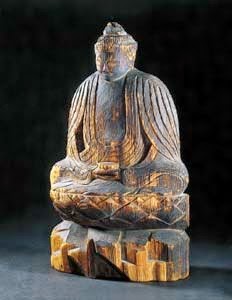
厳島神社 Itsukushima Jinja
Hokkaido 釧路市米町1‐3‐18
- source : bunka.nii.ac.jp
.......................................................................

The statue is about 36 cm high.
Probably from the temple 禅桂寺 Zenkazura-Ji in 1792. For 施主富治郎母 the mother of Fujiwara Tomijiro, a silk trader, who died at the age of 76 years.
Gunma 群馬県みどり市 Midori city
- reference source : city.midori.gunma.jp/www/contents -
.......................................................................

Statues at the temple Yakushi-Ji
Gifu 岐阜県羽島市上中町長間
The temple has 薬師三尊像 and 9 statues of Enku
- reference source : hashimakanko.jp/store/yakushiji -
.......................................................................
. . . CLICK here for more Yakushi statues carved by Enku !
:::::::::::::::::::::::::::::::::::::::::::::::::::::::::::::::::::::::::::::::::::::::::::::::::::::::::::::::::::::::::::::::::::::::::::::::::::::::::::::::::::::::::::::::::::::::::::::::::::::::::
. Shichibutsu Yakushi 七仏薬師 Seven Yakushi Statues .
Zenmyooshoo Kichijoooo Nyorai
Hoogetsu Chigonkoo Onjizaioo Nyorai
Konjiki Hookoo Myoogyoojooju Nyorai
Muyuu Saishoo Kichijoo Nyorai
Hookai Raion Nyorai
Hookai Shooe Yuugijintsuu Nyorai
Yakushi Rurikoo Nyorai.
Six of them are preserved in a temple in Niigata.
上阿古谷の毘沙門堂 Akotani, Bishamon Hall

- source : nara_suimeishi
:::::::::::::::::::::::::::::::::::::::::::::::::::::::::::::::::::::::::::::::::::::::::::::::::::::::::::::::::::::::::::::::::::::::::::::::::::::::::::::::::::::::::::::::::::::::::::::::::::::::::
飛騨の国の正宗寺 - Temple Shoso-Ji in Hida

This temple is related to Nr. 32 of the pilgrimage to 33 Kannon Temples in Saikoku 西国三十三観音.
It was founded in 1596.
高山市丹生川町北方1004 / 1004 Nyūkawachō Kitagata, Takayama-shi, Gifu
- source : hidakannon.jp
.......................................................................
円空上人と小さな仏さまたち Saint Enku and the small Buddha Statues

One day Enku san stayed at the temple 正宗寺 Shoso-Ji in Hida and was carving the statue of Yakushi Nyorai.
The children of the village had been watching him through the window and sometimes talked to him.
After some time the statue was finished and placed on an altar in the main temple hall.

Then one day Enku san was taking a nap after lunch.
The children sneaked into the hall, lifted the statue from the altar and carried it outside.
Enku observed them through half-open eyes, but did not say anything, soon he continued to nap.
Oh dear, where had they been carrying the Buddha statue?
They were all playing with the statue down by the river! The kids who could not swim used the wooden statue as a swim ring! 〔浮き輪〕
All went well until an old man came along the riverside and was quite surprized at what he saw.
"Hey you naughty kids! What are you doing to the Buddha statue? Bring it back to the temple immediately!" he admonished them severely.

The kids began to cry and brought the statue back to the temple, crying all the way.
BUT
on that night the man from the village suddenly developed a high fever!
At his bedside in his dream appeared Yakushi Nyorai from the afternoon:
"You have been quite wrong this afternoon. I wanted the kids to play happily without any harm done!" Yakushi scolded him.
The old man was surprized:
"Oh dear, I am so so so sorry" he mumbled. "Dear Mister Yakushi Buddha, I did not know that. It is all my fault." he apologized many times.
Then Yakushi left quietly and - oh wonder - the fever of the old man went down.
The next day our old man went to the temple with some offerings.
Enku smiled at him:
"So this is what happened. You know, the Buddha statues which I carve all like to play with children. Well, old man, please let the other villagers know too. If someone gets ill or if the children need someone to play, come here and fetch this Yakushi statue to be with them and enjoy with them. That is why I made him for all of you, that is what he wants. No need to worry about anything!"
Enku folded his hands in a greeting.
This is why the Buddha statue that Enku had carved is always with the people of the village.
. Legends about Yakushi Nyorai 薬師如来 .
:::::::::::::::::::::::::::::::::::::::::::::::::::::::::::::::::::::::::::::::::::::::::::::::::::::::::::::::::::::::::::::::::::::::::::::::::::::::::::::::::::::::::::::::::::::::::::::::::::::::::
. Buddha Statues and Japanese Deities .
[ . BACK to DARUMA MUSEUM TOP . ]
[ . BACK to WORLDKIGO . TOP . ]
- #enkuyakushi -
::::::::::::::::::::::::::::::::::::::::::::::::::::::::::::::::::::::::::::::::::::::::::::::::::::::::::::::::::::::::::::::::::::::::::::::::::::::::::::::::::::::::::::::::::::::::::::::::::::::::::
. Yakushipedia ABC-Index 薬師如来 Yakushi Nyorai .
:::::::::::::::::::::::::::::::::::::::::::::::::::::::::::::::::::::::::::::::::::::::::::::::::::::::::::::::::::::::::::::::::::::::::::::::::::::::::::::::::::::::::::::::::::::::::::::::::::::::::
ENKU: YAKUSHI SANZON 薬師三尊
Triad Image of Yakushi Buddha by Enku
With Nikko Bosatsu and Gakko Bosatsu 日光菩薩 / 月光菩薩
These images were created by Reverend Enku when he visited the Shima region in 1674.
Two Bodhisattva figures (Nikko and Gakko) are placed on both sides of the Yakushi Buddha, representing the center of bliss. They all look as though they are watching the present world clad with garments woven from the passage of time.
Yakushi Sanzon from the Yakushi Hall in Ise, Kamigochi
志摩・上五知(かみごち)の小さな薬師堂 / 薬師堂三尊
円空鉈 (carved by Enku)
- source : akafuku.co.jp -
. Yakushi sanzon 薬師三尊 Yakushi Triad, Trias, Trinity .
- Introduction -
:::::::::::::::::::::::::::::::::::::::::::::::::::::::::::::::::::::::::::::::::::::::::::::::::::::::::::::::::::::::::::::::::::::::::::::::::::::::::::::::::::::::::::::::::::::::::::::::::::::::::
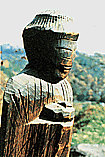
- source : forest.minokamo.gifu.jp -
:::::::::::::::::::::::::::::::::::::::::::::::::::::::::::::::::::::::::::::::::::::::::::::::::::::::::::::::::::::::::::::::::::::::::::::::::::::::::::::::::::::::::::::::::::::::::::::::::::::::::
厳島神社 Itsukushima Jinja
Hokkaido 釧路市米町1‐3‐18
- source : bunka.nii.ac.jp
.......................................................................
The statue is about 36 cm high.
Probably from the temple 禅桂寺 Zenkazura-Ji in 1792. For 施主富治郎母 the mother of Fujiwara Tomijiro, a silk trader, who died at the age of 76 years.
Gunma 群馬県みどり市 Midori city
- reference source : city.midori.gunma.jp/www/contents -
.......................................................................

Statues at the temple Yakushi-Ji
Gifu 岐阜県羽島市上中町長間
The temple has 薬師三尊像 and 9 statues of Enku
- reference source : hashimakanko.jp/store/yakushiji -
.......................................................................
. . . CLICK here for more Yakushi statues carved by Enku !
:::::::::::::::::::::::::::::::::::::::::::::::::::::::::::::::::::::::::::::::::::::::::::::::::::::::::::::::::::::::::::::::::::::::::::::::::::::::::::::::::::::::::::::::::::::::::::::::::::::::::
. Shichibutsu Yakushi 七仏薬師 Seven Yakushi Statues .
Zenmyooshoo Kichijoooo Nyorai
Hoogetsu Chigonkoo Onjizaioo Nyorai
Konjiki Hookoo Myoogyoojooju Nyorai
Muyuu Saishoo Kichijoo Nyorai
Hookai Raion Nyorai
Hookai Shooe Yuugijintsuu Nyorai
Yakushi Rurikoo Nyorai.
Six of them are preserved in a temple in Niigata.
上阿古谷の毘沙門堂 Akotani, Bishamon Hall
- source : nara_suimeishi
:::::::::::::::::::::::::::::::::::::::::::::::::::::::::::::::::::::::::::::::::::::::::::::::::::::::::::::::::::::::::::::::::::::::::::::::::::::::::::::::::::::::::::::::::::::::::::::::::::::::::
飛騨の国の正宗寺 - Temple Shoso-Ji in Hida
This temple is related to Nr. 32 of the pilgrimage to 33 Kannon Temples in Saikoku 西国三十三観音.
It was founded in 1596.
高山市丹生川町北方1004 / 1004 Nyūkawachō Kitagata, Takayama-shi, Gifu
- source : hidakannon.jp
.......................................................................
円空上人と小さな仏さまたち Saint Enku and the small Buddha Statues
One day Enku san stayed at the temple 正宗寺 Shoso-Ji in Hida and was carving the statue of Yakushi Nyorai.
The children of the village had been watching him through the window and sometimes talked to him.
After some time the statue was finished and placed on an altar in the main temple hall.
Then one day Enku san was taking a nap after lunch.
The children sneaked into the hall, lifted the statue from the altar and carried it outside.
Enku observed them through half-open eyes, but did not say anything, soon he continued to nap.
Oh dear, where had they been carrying the Buddha statue?
They were all playing with the statue down by the river! The kids who could not swim used the wooden statue as a swim ring! 〔浮き輪〕
All went well until an old man came along the riverside and was quite surprized at what he saw.
"Hey you naughty kids! What are you doing to the Buddha statue? Bring it back to the temple immediately!" he admonished them severely.
The kids began to cry and brought the statue back to the temple, crying all the way.
BUT
on that night the man from the village suddenly developed a high fever!
At his bedside in his dream appeared Yakushi Nyorai from the afternoon:
"You have been quite wrong this afternoon. I wanted the kids to play happily without any harm done!" Yakushi scolded him.
The old man was surprized:
"Oh dear, I am so so so sorry" he mumbled. "Dear Mister Yakushi Buddha, I did not know that. It is all my fault." he apologized many times.
Then Yakushi left quietly and - oh wonder - the fever of the old man went down.
The next day our old man went to the temple with some offerings.
Enku smiled at him:
"So this is what happened. You know, the Buddha statues which I carve all like to play with children. Well, old man, please let the other villagers know too. If someone gets ill or if the children need someone to play, come here and fetch this Yakushi statue to be with them and enjoy with them. That is why I made him for all of you, that is what he wants. No need to worry about anything!"
Enku folded his hands in a greeting.
This is why the Buddha statue that Enku had carved is always with the people of the village.
. Legends about Yakushi Nyorai 薬師如来 .
:::::::::::::::::::::::::::::::::::::::::::::::::::::::::::::::::::::::::::::::::::::::::::::::::::::::::::::::::::::::::::::::::::::::::::::::::::::::::::::::::::::::::::::::::::::::::::::::::::::::::
. Buddha Statues and Japanese Deities .
[ . BACK to DARUMA MUSEUM TOP . ]
[ . BACK to WORLDKIGO . TOP . ]
- #enkuyakushi -
::::::::::::::::::::::::::::::::::::::::::::::::::::::::::::::::::::::::::::::::::::::::::::::::::::::::::::::::::::::::::::::::::::::::::::::::::::::::::::::::::::::::::::::::::::::::::::::::::::::::::
2013-01-01
The Last Page
[ . BACK to DARUMA MUSEUM TOP . ]
:::::::::::::::::::::::::::::::::::::::::::::::::::::::::::::::::::::::::::::::::::::::::::::::::::::::::::::::::::::::::::::::::::::::::::::::::::::::::::::::::::::::::::::::::::::::::::::::::::::::::
This is the LAST PAGE !
Thank you for your visit and come back!
Gabi Greve
:::::::::::::::::::::::::::::::::::::::::::::::::::::::::::::::::::::::::::::::::::::::::::::::::::::::::::::::::::::::::::::::::::::::::::::::::::::::::::::::::::::::::::::::::::::::::::::::::::::::::
. Enku - Exhibitions - INFO .
. Enku - Museums - INFO .
. Enku - Temples - INFO .

Enku: Sculptor of a Hundred Thousand Buddhas
Kazuaki Tanahashi
:::::::::::::::::::::::::::::::::::::::::::::::::::::::::::::::::::::::::::::::::::::::::::::::::::::::::::::::::::::::::::::::::::::::::::::::::::::::::::::::::::::::::::::::::::::::::::::::::::::::::
. Buddha Statues and Japanese Deities .
[ . BACK to DARUMA MUSEUM TOP . ]
[ . BACK to WORLDKIGO . TOP . ]
::::::::::::::::::::::::::::::::::::::::::::::::::::::::::::::::::::::::::::::::::::::::::::::::::::::::::::::::::::::::::::::::::::::::::::::::::::::::::::::::::::::::::::::::::::::::::::::::::::::::::
:::::::::::::::::::::::::::::::::::::::::::::::::::::::::::::::::::::::::::::::::::::::::::::::::::::::::::::::::::::::::::::::::::::::::::::::::::::::::::::::::::::::::::::::::::::::::::::::::::::::::
This is the LAST PAGE !
Thank you for your visit and come back!
Gabi Greve
:::::::::::::::::::::::::::::::::::::::::::::::::::::::::::::::::::::::::::::::::::::::::::::::::::::::::::::::::::::::::::::::::::::::::::::::::::::::::::::::::::::::::::::::::::::::::::::::::::::::::
. Enku - Exhibitions - INFO .
. Enku - Museums - INFO .
. Enku - Temples - INFO .
Enku: Sculptor of a Hundred Thousand Buddhas
Kazuaki Tanahashi
:::::::::::::::::::::::::::::::::::::::::::::::::::::::::::::::::::::::::::::::::::::::::::::::::::::::::::::::::::::::::::::::::::::::::::::::::::::::::::::::::::::::::::::::::::::::::::::::::::::::::
. Buddha Statues and Japanese Deities .
[ . BACK to DARUMA MUSEUM TOP . ]
[ . BACK to WORLDKIGO . TOP . ]
::::::::::::::::::::::::::::::::::::::::::::::::::::::::::::::::::::::::::::::::::::::::::::::::::::::::::::::::::::::::::::::::::::::::::::::::::::::::::::::::::::::::::::::::::::::::::::::::::::::::::
Subscribe to:
Comments (Atom)