:::::::::::::::::::::::::::::::::::::::::::::::::::::::::::::::::::::::::::::::::::::::::::::::::::::::::::::::::::::::::::::::::::::::::::::::::::::::::::::::::::::::::::::::::::::::::::::::::::::::::
How a piece of wood becomes a Buddha Statue
in the hands of Enku
In the forest
a vision
taking shape

source : from Honda, infoseek
:::::::::::::::::::::::::::::::::::::::::::::::::::::::::::::::::::::::::::::::::::::::::::::::::::::::::::::::::::::::::::::::::::::::::::::::::::::::::::::::::::::::::::::::::::::::::::::::::::::::::

Look at more Fudo Myo-O Statues by Enku 不動明王
. Enku and his Fudo Statues 円空仏
Some safekeep copys of the Fudo Pictures are here, starting from #49.
My Photo Album : Fudo Myo-O
:::::::::::::::::::::::::::::::::::::::::::::::::::::::::::::::::::::::::::::::::::::::::::::::::::::::::::::::::::::::::::::::::::::::::::::::::::::::::::::::::::::::::::::::::::::::::::::::::::::::::
- - - - - Short Biography
1632 寛永 9 (?)
born in Mino Province, Gifu Prefecture, Minami village
美並村瓢が岳山麓
1650 慶安3
He lost his mother in the great flood of river Naragawa 長良川
1663 寛文 3
becomes a Buddhist priest at Kaigawa Temple 美並村粥川寺
1665 寛文 5
After practising austerities in a cave at Mount Ibuki he travelles to Hokkaido
伊吹山平等岩 Ibukiyama no Byoodoo iwa 平等岩 Byodo-Iwa
1669 - 1671 寛文 9 - 11
after travelling in Hokkaido, Tohoku and Kanto he returns to Kaigawa Temple
1674 延宝 2
Practising austerities at Mount Omine, Sho no Iwaya, writing Waka
大峯山 - 笙の窟
1676 延宝 4
Walks in Japan as a meandering monk - 日本修行乞食沙門
1685 貞享 2
visits River Niukawa, Temple Zenko-Ji and the Hida region, carving statues
丹生川, 千光寺 や飛騨各地
1689 元禄 2 - Genroku 2
Walks in Japan as a meandering monk in Omi and Kanto, carving more statues
1692 元禄 5
Praying for rain (amagoi) at Kooga jinja 高賀神社 Koga shrine
洞戸村, 高賀神社
1695 元禄8 - 7月13日
He confirms his successor carver, Enchoo 円長 Encho.
1695, 15th day of the 7th lunar month 元禄 8 - 7月15日
at age 64 - enters into the next life at Saki town, Temple Miroku-Ji
関市池尻, 弥勒寺
. Temples and Shrines visited .
with the dates of the statues carved there
:::::::::::::::::::::::::::::::::::::::::::::::::::::::::::::::::::::::::::::::::::::::::::::::::::::::::::::::::::::::::::::::::::::::::::::::::::::::::::::::::::::::::::::::::::::::::::::::::::::::::
Enku walked all along Japan and attended mostly to the poor people. If he could not help the dying in a village any more, he would take a piece of firewood from a man's hut, cut a rough figure of Kannon Bosatsu and give it to the poor, telling him or her to use it as a guide on the trip to the nether world.
He also cut rough koppa butsu 木っ端仏, statues from scrap, to console poor mothers who had lost their babies, either through accidents or on purpose, since they could not feed and raise female babies in many regions of Northern Japan. (By the way, many Kokeshi (1) こけし were carved for that purpose too.)
.. .. .. .. .. Koppa-Butsu Statues こっぱぶつ

On the Tsugaru penninsula, there are many temples who still house one or two Enku Statues. In one temple I visited, we could not see it, because, as the priest told me, the statue was all eaten by mice.
Well, how come the mice eat wood? I asked him.
Poor people throw a handful of rice over the statues after the harvest as an offering and thank, and the Enku statues have many nooks where the rice is left. In winter, the mice come feeding on these offerings, picking bit by bit off the wood too.
..............................................................................................................................................................
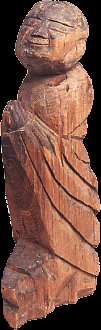
Self-Portrait of Enku in Seki, Gifu 自刻像
善財童子 (通称 自刻像)神明神社 所蔵
http://www.city.seki.gifu.jp/kankou/seki/enku.html
:::::::::::::::::::::::::::::::::::::::::::::::::::::::::::::::::::::::::::::::::::::::::::
Born in Gifu Prefecture, Enku the Priest
traveled on foot throughout Japan and carved approximately 120,000 wooden images of Buddha during his lifetime. He is said to have had no permanent home, however, during his latter years, he rooted himself deeply into the town of Seki. After the restoration of the Mirokuji Temple, he entered a stationary life to attain Buddhahood during his lifetime on the banks of the Sagami River in Seki.
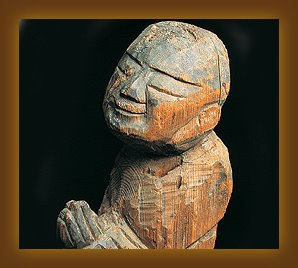
Today, there remain over 150 images of "Enku Buddha" 円空仏 carved by Enku the Priest. "Enku Buddha", a simple wooden statue dynamically carved with a single hatchet, may appear unrefined, however, the faces of Buddha express affluent emotions. His unique style has also attracted fans from overseas, enjoying high appraisal.
Enku went on a pilgrimage all over Japan, and carved Buddhist statues one after another. More than 150 statues by Enku have been identified and authenticated in Seki City, and it has been said that he entered nirvana in this area. A memorial stela for his entrance to nirvana now stands there, silently looking at the Nagara River.
The Enku House
The Enku House is a resource center featuring Enku the Priest who is strongly associated with Seki City. Built to be the main attraction for the historical park plan, here you will find displays of his carved Buddha images and an introduction of his entering into the life of Buddhahood.It is the core facility for the Field Museum, interlocking the Mirokuji Temple, where Enku spent his latter years, and the Sagara River, where he attained Buddhahood. Many of the images of Buddha carved by Enku, which are found within the city, are displayed here.
http://www.sekikanko.jp/e/guide/enku.html

Enku's Grave at the temple Miroku Ji 弥勒寺
http://www.nihonkoenmura.jp/theme3/enku04.htm
Enku made 120,000 wooden images of Buddha during his life-long pilgrimage on which he visited many parts of Japan, including Hokkaido. It is said that he reached Seki and died here. Though he led his life as a poor pilgrim and traveling artist, he is said to have been an almsgiver all his life. When we look at his wooden statue of himself, we can feel his warm personality.
入定塚 Nyujo-tsuka is Enku's grave.
It is said that in 1688 he was buried here.
Buddhist prayers were the passion that drove him to a lifelong commitment to art and recited many while many villagers watched in sorrow. Mirokuji Temple Ruin is the remains of a temple reconstructed by Enku in his later years. We can still see the remains of a tower built in the Hakuho period.
http://www.nhk-chubu-brains.co.jp/DDT-E/gifu/seki/enku.html
:::::::::::::::::::::::::::::::::::::::::::::::::::::::::::::::::::::::::::::::::::::::::::::::::::::::::::::::::::::::::::::::::::::::::::::::::::::::::::::::::::::::::::::::::::::::::::::::::::::::::

Enku - Life to Live - A Film
円空 今に生きる
source : cinema1.jp
There was also a TV special in 1988 about Enku,
played by Tamba Tetsuro, and Kiki Kirin as the nun with the smiling face.
丹波哲郎、 倍賞美津子 (勢似)、樹木希林( 陀羅尼)
and Matsuo Basho 松尾芭蕉, played by Nakamura Katsuo 中村嘉葎雄.
I remember this as one of the most impressive TV re-creations of a personal history.
source : tvdrama-db.com
:::::::::::::::::::::::::::::::::::::::::::::::::::::::::::::::::::::::::::::::::::::::::::::::::::::::::::::::::::::::::::::::::::::::::::::::::::::::::::::::::::::::::::::::::::::::::::::::::::::::::
Enku, unlike traditional sculptors, sculptured freely, roughly, and unexpectedly by using one piece of scrap wood and timber sent afloat down a river.
Koppabutsu 木っ端仏 are made from scrap pieces of wood.
He was an extraordinary novelist in the early Edo era who expressed his strong religious believe in carving.
Images of 12 Heavenly Generals 十二神将
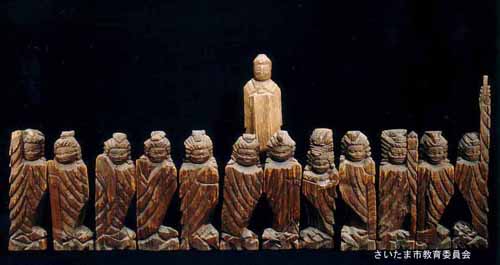
Saitama Prefecture
:::::::::::::::::::::::::::::::::::::::::::::::::::::::::::::::::::::::::::::::::::::::::::::::::::::::::::::::::::::::::::::::::::::::::::::::::::::::::::::::::::::::::::::::::::::::::::::::::::::::::
Contribution from a friend, July 2006
Enku: Sculptor of a Hundred Thousand Buddhas,
by Kazuaki Tanahashi, Shambhala,
At the time the book was published, he taught various subjects at the Zen Center in San Francisco. It has 87 black and white plates of Enku's work, plus a number of comparative line drawings of various subjects, illustrating how Enku's style evolved from his early period to his late period. There are also a number of Enku's poems (English only).
What I first liked about Enku, when I came across Dotzenko's book, were the woodchip Buddhas (koppa 木っ端). He put me in mind of Alberto Giacometti, who sculpted elongated, attenuated human figures. From Wikipedia, about Giacometti:
"Obsessed with creating his sculptures exactly as he envisioned through his unique view of reality, he often carved until they were as thin as nails and reduced to the size of a pack of cigarettes, much to his consternation."
As Kazuaki Tanahashi traveled around Japan with the photographer Tetsuo Kuribara, he collected folklore about Enku and his work. My favorite, from 'a man in Hida':
When I was a child, there were a lot of Enku's Buddhas in my village temple. They kept them standing in rows on the altar in a small prayer-house there. The old caretaker once said to me, 'You know those Buddhas Enku carved? They certainly are whimsical . . . whenever you count them, you get a different number.'
' Why, what do you mean?' I asked.
' Well, it's because they're always going out to play.'
Footnote to this by Gabi Greve:
Children used the statues of Enku and Mokujiki to play with. For example, one statue was frequently thrown in the shallow river of the village in summer, and the children could swim for it to get it back.
Statues of Mokujiki where carved hollow in the backside, so the kids could use it as a sledge in wintertime.
The faces of these statues are completely worn out.
Read more about ......... Mokujiki 木喰 The Wood Eater
:::::::::::::::::::::::::::::::::::::::::::::::::::::::::::::::::::::::::::::::::::::::::::::::::::::::::::::::::::::::::::::::::::::::::::::::::::::::::::::::::::::::::::::::::::::::::::::::::::::::::
. Enku - Exhibitions - INFO .
. Enku - Museums - INFO .
. Enku - Temples - INFO .
. Legends about Enku 円空と伝説 .
Yakushi Temple in Nagoya 鉈薬師の円空仏

http://www.a-namo.com/ku_info/chikisaku/pages_n/enku_butsu.htm
:::::::::::::::::::::::::::::::::::::::::::::::::::::::::::::::::::::::::::::::::::::::::::::::::::::::::::::::::::::::::::::::::::::::::::::::::::::::::::::::::::::::::::::::::::::::::::::::::::::::::
. Hida no takumi 飛騨の匠 expert craftsmen from Hida .
Mokujiki 木喰 (1718-1810) and Enkū 円空 (1632-1695)
. Yanagi Sōetsu, Sooetsu 柳宗悦 Yanagi Soetsu Muneyoshi .
. Buddha Statues and Japanese Deities .
[ . BACK to DARUMA MUSEUM TOP . ]
[ . BACK to WORLDKIGO . TOP . ]
- #enkuintroduction -
::::::::::::::::::::::::::::::::::::::::::::::::::::::::::::::::::::::::::::::::::::::::::::::::::::::::::::::::::::::::::::::::::::::::::::::::::::::::::::::::::::::::::::::::::::::::::::::::::::::::::


